
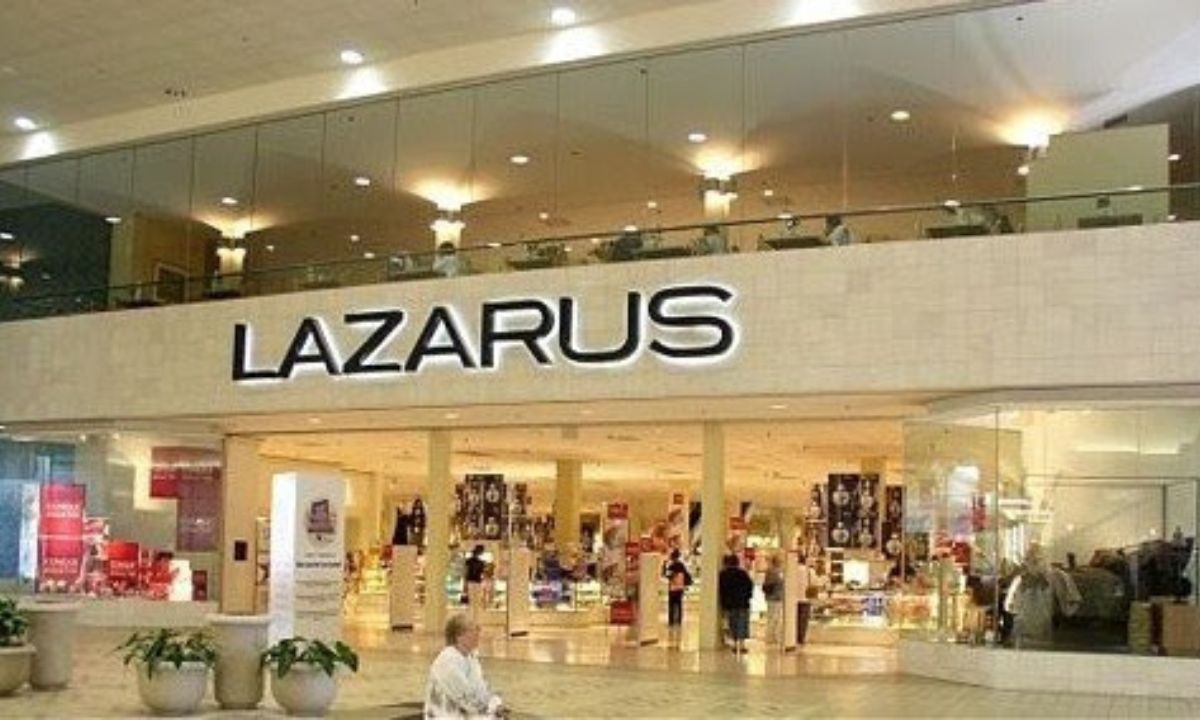
Picture this. You step off the sidewalk onto High Street in downtown Columbus, the air crisp with that unmistakable holiday chill. Neon lights flicker across the massive Lazarus facade, and families press their noses against those famous Christmas windows. For more than 150 years, lazarus dept store wasn’t just a place to buy clothes or furniture. It was where memories were made, where generations of Ohioans marked life’s milestones. From its modest start in 1851 to its eventual evolution into Macy’s, this Columbus institution embodied the golden age of American department stores. And honestly, its story deserves more than a passing glance. It’s a tale of immigrant grit, family vision, and retail firsts that still echo in today’s malls and online carts.
If you grew up in the Midwest or have ties to Ohio retail history, you probably remember the buzz. Maybe it was lunch in the Chintz Room after a back-to-school shopping trip, or the thrill of spotting Santa in those animated window displays. Lazarus wasn’t just commerce. It was community. Let’s walk through its century-plus journey together, shall we?
Table of Contents
- The Humble Beginnings: Simon Lazarus Arrives in Columbus
- Building an Empire: The Flagship Store and Early Expansions
- Retail Firsts That Shaped the Industry
- A Family Legacy Meets Federated Department Stores
- Holiday Traditions That Lit Up Columbus
- Dining Delights: The Chintz Room and Secret Recipes
- Downtown Shopping Districts in Their Prime
- What Happened to Lazarus Dept Store: The Macy’s Transition
- The Lazarus Building Today: A New Chapter
The Humble Beginnings: Simon Lazarus Arrives in Columbus
Simon Lazarus didn’t set out to build a retail dynasty. A German immigrant who arrived in Columbus with little more than determination (and about $3,000 in his pocket, according to family lore), he opened a one-room men’s clothing store on South High Street in 1851. That tiny 20-by-40-foot space sold tailored suits and ready-made garments. By 1870, the store had grown to offer a full line of merchandise. His sons, Fred and Ralph, joined the business and brought fresh ideas. After Ralph’s death in 1903, Fred incorporated the company as F&R Lazarus & Co., a name that would soon become synonymous with quality and innovation across the Midwest.
You might not know this, but those early years coincided with post-Civil War demand. Soldiers returning home needed civilian clothes, and Lazarus wagons rolled out to Rochester to stock up. It was practical entrepreneurship at its best. No fancy advertising campaigns, just word-of-mouth and solid service. That foundation set the stage for everything that followed.
Building an Empire: The Flagship Store and Early Expansions
By 1909, Lazarus had outgrown its original spot. The company constructed its iconic flagship at the corner of Town and High Streets. Designed by Richards, McCarty & Bulford, the building spanned nearly 700,000 square feet and became the largest department store in the Midwest at the time. Seven stories high on some sides, it featured escalators (one of the first in the nation) and eventually air conditioning. Shoppers marveled at the scale. You could furnish an entire home, outfit the family, and still have time for a soda at the Niagara Fountain.
Lazarus expanded thoughtfully. It acquired Shillito’s in Cincinnati and helped form Federated Department Stores in 1929 alongside Abraham & Straus and others. Bloomingdale’s joined soon after. This wasn’t random growth. It was strategic, creating a network that stretched from Ohio to Indiana, Kentucky, and beyond. By the mid-20th century, Lazarus operated dozens of stores, each carrying that unmistakable Columbus touch.
Retail Firsts That Shaped the Industry
Lazarus didn’t just follow trends. It set them. Ever wonder why Black Friday shopping kicks off the holiday season with such precision? Credit Fred Lazarus Jr., who lobbied President Franklin D. Roosevelt to fix Thanksgiving on the fourth Thursday in November. The goal? A consistent start to the Christmas shopping window. That small policy tweak boosted retail nationwide.
The store also pioneered the “one low price” policy, eliminating haggling long before it became standard. It installed the region’s first escalators in 1909 and boasted the first fully air-conditioned department store. Later experiments included discount formats like Gold Circle and off-mall shops called Capri. These moves showed foresight. While competitors stuck to old models, Lazarus tested new ones. Some worked brilliantly. Others taught valuable lessons about adapting to suburban malls and changing consumer habits.
Here’s a quick comparison table of Lazarus innovations versus typical 1950s retail practices. It highlights why the brand stood out:
| Aspect | Lazarus Approach | Typical 1950s Department Stores |
|---|---|---|
| Pricing Policy | Fixed “one low price,” no bargaining | Haggling common in smaller shops |
| Technology | Early escalators and full AC | Manual elevators, limited cooling |
| Holiday Marketing | Elaborate animated windows + neon lights | Basic decorations, no consistent themes |
| Customer Experience | In-store dining (Chintz Room) + events | Basic sales floors, minimal amenities |
| Expansion Strategy | Federated partnerships for scale | Independent operations |
That table barely scratches the surface, but you get the idea. Lazarus treated shopping as an experience, not a chore.
A Family Legacy Meets Federated Department Stores
The Lazarus family didn’t just own the stores. They lived them. Fred Lazarus Jr. rose to lead Federated, steering it through decades of growth. His son Ralph and grandson Robert continued the tradition. For business students studying retail mergers and acquisitions, Lazarus offers a textbook case. The 1929 formation of Federated pooled resources while preserving local identities. It allowed regional powerhouses like Lazarus to compete with national giants.
Yet family control eventually gave way to corporate reality. By the 1990s, headquarters moved to Cincinnati for efficiency. The last Lazarus family member in an official role stepped back in the early 2000s. Some experts disagree on the timing, but here’s my take: the shift preserved the stores physically while ending the personal touch that made Lazarus feel like home.
Holiday Traditions That Lit Up Columbus
No discussion of lazarus dept store history feels complete without the holidays. Starting in the 1880s (with the first documented Christmas window ad in 1886), those displays became legendary. Animated scenes filled the big window at Town and High. Themes ranged from zoo animals to fairy tales. In 1937, 2,000 feet of neon tubing lit the exterior. From 1963 to 1990, the rooftop water tower glowed like a giant Christmas tree, visible for miles.
Families made pilgrimages downtown just to see the windows. Kids pressed against the glass, eyes wide. It wasn’t just commerce. It was magic. And let’s not forget the shopping bags. Those glossy Lazarus holiday sacks became keepsakes themselves.
Dining Delights: The Chintz Room and Secret Recipes
Shopping worked up an appetite, and Lazarus delivered. The fifth-floor Chintz Room (originally a tea room from 1914, renamed in 1953 for its patterned curtains) was the crown jewel. Ladies who lunched ordered chicken salad that people still crave. The Buckeye Room offered homestyle fare like chicken tetrazzini. Downstairs, the Copper Kettle served quick bites.
The store even published cookbooks. “Recipes from Our Kitchen” captured favorites from the Chintz Room, Buckeye Room, and mall locations. Spinach salad, bourbon bread pudding, the “hidden sandwich” with its layers of ham, turkey, and special dressing. These weren’t secrets in the vault sense, but they felt personal. Many Columbus families still swap them at Thanksgiving. Honestly, this isn’t talked about enough when people reminisce about department store dining.
Downtown Shopping Districts in Their Prime
Lazarus anchored Columbus’s downtown retail scene during its heyday. In the 1950s and 60s, you dressed up to shop. Parking was easy enough, and the energy felt electric. The flagship connected to City Center Mall via a skywalk in 1989, extending its reach even as suburbs pulled shoppers away. It symbolized the golden age when downtown districts thrived on foot traffic and community pride.
What Happened to Lazarus Dept Store: The Macy’s Transition
By the late 1990s, challenges mounted. Suburban malls, big-box competitors, and shifting habits took a toll. Sales at the downtown flagship dropped sharply. In 2003, Federated rebranded stores as Lazarus-Macy’s. The full switch to Macy’s came in 2005. The Columbus flagship closed its doors in 2004 after 153 years. The giant sign came down that August. It stung for longtime patrons and employees.
Yet the stores didn’t vanish. They live on under the Macy’s banner, carrying forward much of the heritage. The transition reflected broader industry consolidation. Federated’s 2005 merger with May Company created the largest U.S. department store operator. Efficiency won out over regional names, for better or worse.
The Lazarus Building Today: A New Chapter
Thankfully, the flagship building at 141 South High Street survived. Renovated after closure, it earned LEED Gold status with a rooftop garden for water harvesting. Today it houses state offices, the Ohio State University Urban Arts Space, the Columbus Chamber of Commerce, and restaurants. Street-level shops buzz with new energy. The structure that once rang with cash registers now supports community work. It’s a fitting evolution. The physical landmark endures even as the brand name fades into history.
FAQ
What is the history of lazarus dept store in Columbus? Lazarus began in 1851 as Simon Lazarus’s small men’s clothing shop and grew into the Midwest’s premier department store chain. Its Columbus flagship operated until 2004, pioneering escalators, air conditioning, and holiday displays while helping found Federated Department Stores.
What happened to lazarus dept store? Federated rebranded it Lazarus-Macy’s in 2003 and fully converted stores to Macy’s by March 2005. The downtown Columbus location closed in 2004 due to declining sales and industry shifts toward national branding.
Where was the lazarus department store flagship building? The flagship stood at Town and High Streets in downtown Columbus (now 141 South High Street). The 1909 building still exists as mixed-use office and retail space.
Did lazarus dept store have secret recipes? Yes. Its Chintz Room and Buckeye Room restaurants inspired a popular cookbook. Favorites like chicken salad and bourbon bread pudding remain cherished by former patrons.
What were shopping trips like at lazarus in the 1950s? Elegant and experiential. Families dressed up, rode escalators, viewed holiday windows, and dined in the Chintz Room. It felt like an event rather than a chore.
How did lazarus department store influence Christmas traditions? Elaborate animated window displays and rooftop tree lighting drew crowds annually. Fred Lazarus Jr.’s work fixing Thanksgiving’s date also standardized the holiday shopping season nationwide.
What is the connection between lazarus dept store and Macy’s brand heritage? As a Federated founding member, Lazarus stores became part of the Macy’s family through rebranding. The transition preserved locations while retiring the regional name in 2005.
Wrapping Up the Legacy
Lazarus dept store wasn’t perfect. Retail giants rarely are. But it represented something genuine: a family business that treated customers like neighbors and pushed an entire industry forward. In an era of endless online scrolling, its story reminds us why physical shopping once felt special. The building stands as proof that good ideas outlast names on signs.
If you have your own Lazarus memory, whether it’s a first job, a childhood Santa visit, or that perfect Chintz Room lunch, drop it in the comments. What piece of the legacy sticks with you most? Share it. These stories keep the spirit alive, even if the escalators no longer hum the way they used to. After all, in retail as in life, the best legacies are the ones we pass along.
READ ALSO: The Spark Shop Baby Jumpsuit: Why This Adorable Bear Design Is a Must-Have for Your Little One
 Arthur