
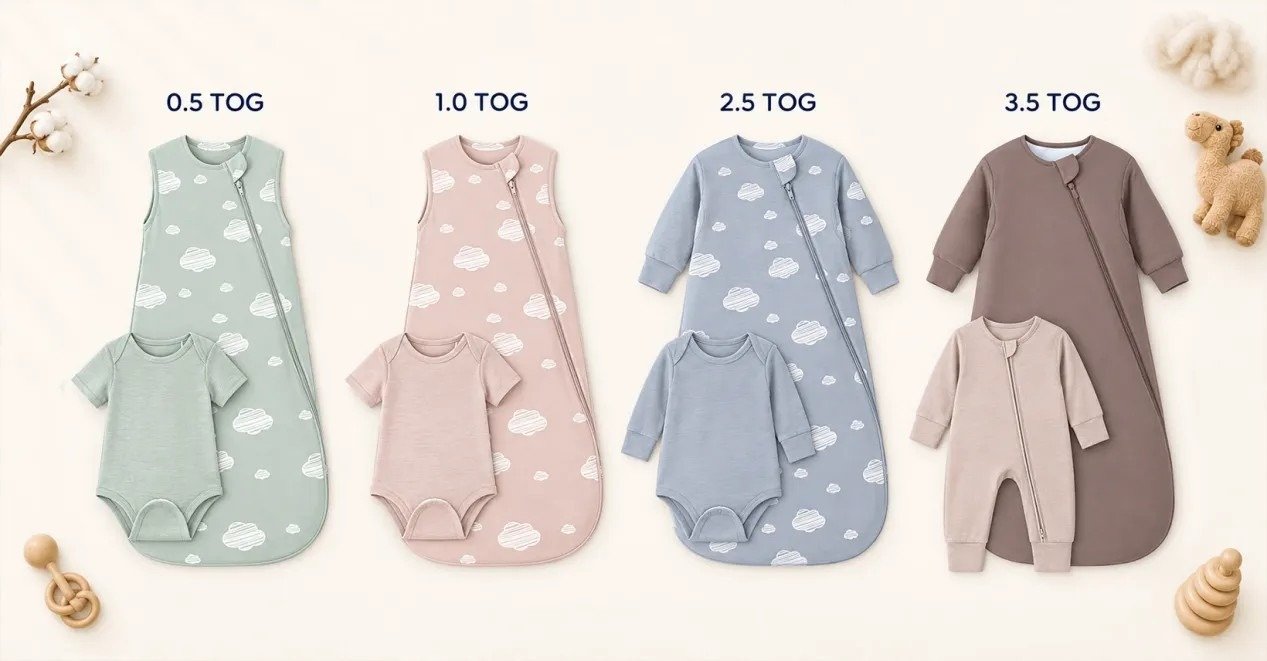
Getting a baby to sleep comfortably through the night involves more than just picking a sleep sack off the shelf. One question that comes up for almost every new parent is what their baby should actually wear underneath it.
Too many layers and the baby overheats. Too few and they wake up cold at three in the morning. Getting the layering right is one of the quieter wins of early parenthood.
The short answer is that the right base layer depends on two things: the room temperature and the TOG rating of your sleep sack.
TOG, which stands for Thermal Overall Grade, tells you how warm a sleep sack is. The higher the number, the warmer the product. A 0.5 TOG is designed for warm rooms, while a 3.5 TOG is built for cold winter nights.
Matching layers to room temperature
A good starting point is the overnight low of your nursery, not just how it feels at bedtime. Many rooms feel comfortable at 7 pm but cool down significantly before morning, which is often what wakes a baby in the early hours.
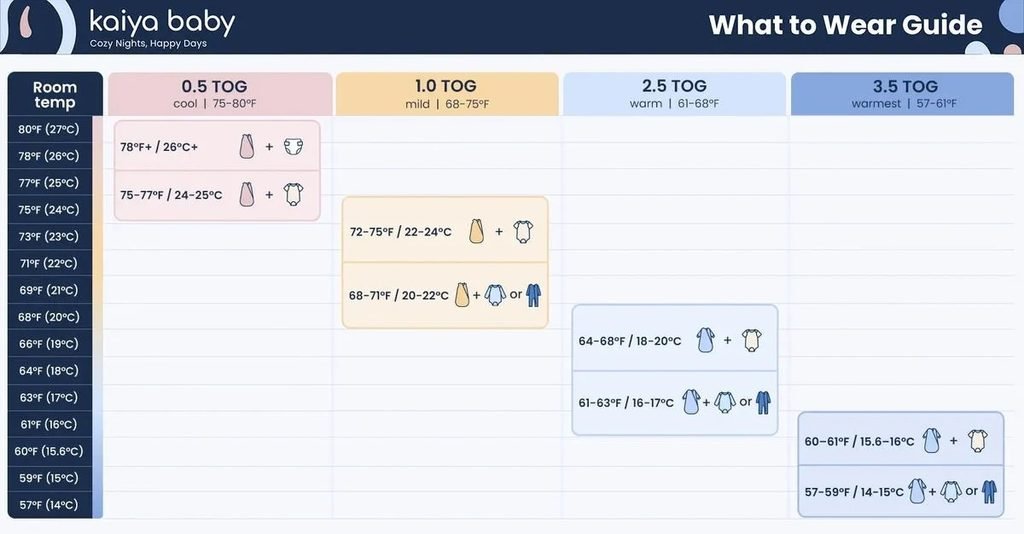
Here is a simple guide to layering by TOG:
· 0.5 TOG (75–80°F / 24–27°C): A diaper alone or a short-sleeve bodysuit is usually enough underneath. The sleep sack provides just enough coverage without trapping heat.
· 1.0 TOG (68–75°F / 20–24°C): A short-sleeve bodysuit in warmer parts of this range, or a long-sleeve bodysuit when the room is on the cooler end.
· 2.5 TOG (61–68°F / 16–20°C): A long-sleeve bodysuit or a footed romper works well. Some parents add light pajamas underneath on the cooler nights.
· 3.5 TOG (57–61°F / 14–16°C): A long-sleeve bodysuit plus warm pajamas or a footed sleeper. This combination keeps warmth consistent through cold winter nights.
Adjusting layers instead of swapping sleep sacks
One thing parents often overlook is that you do not always need a different TOG when the temperature shifts slightly.
If your 1.0 TOG sleep sack is working most nights but the room feels a little cooler than usual, adding a warmer base layer is usually easier than pulling out a different sleep sack.
This flexibility is one of the practical advantages of understanding how layers work together.
A base layer made from a temperature-regulating fabric also makes a real difference. The ClimaCuddle® Essential Pajama Sets from Kaiya Baby, for example, combine merino wool, rayon made from bamboo, and spandex in a way that handles both warmth and moisture at the same time.
The merino wool buffers temperature changes, the bamboo rayon wicks dampness away from skin, and the spandex keeps the fit close without restricting movement.
For babies who run warm or tend to sweat during sleep, that combination tends to prevent the clammy feeling that often leads to waking.
Reading the signs
The clearest indicator that something is off is not a crying baby but a damp one. If your baby’s neck or chest feels sweaty when you check on them, the layers are likely too much.
If they feel cold to the touch or wake frequently during the cooler hours before dawn, they may need more.
Some parents find a temperature-sensing sticker on the sleep sack useful here — Kaiya Baby’s baby clothing includes one that gives a visual cue without requiring you to touch the baby and risk waking them.
Layering for a baby is ultimately about responding to what is actually happening overnight, not following a fixed rule.
Start with the guidelines, then adjust based on how your baby is sleeping and how they feel when you check on them. Most families find their rhythm within a week or two.
More info: please read https://kaiyababy.com/blogs/news/what-should-baby-wear-under-sleep-sack
 Americas Kids
 Arthur