
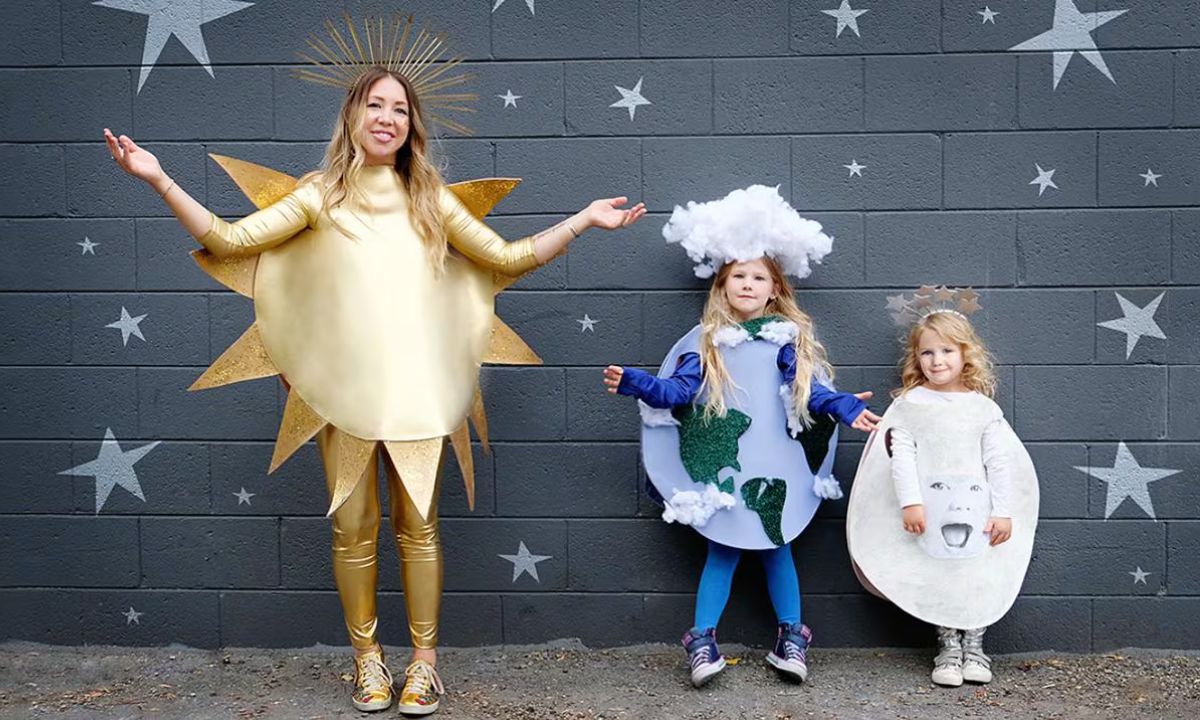
Halloween costumes average $36 to $40 per person in 2026, according to MyStayAtHomeAdventures. For a family of four, that figure climbs well past $150 before candy, decorations, or anything else.
The good news is that the most memorable costumes at any Halloween event are rarely the most expensive ones. Originality and execution matter more than price tags, and both are genuinely achievable on a tight budget.
This article covers:
- Why store-bought costumes consistently disappoint
- How to find your costume concept without starting from scratch
- The thrift store and closet method that costs under $20
- DIY techniques for kids costumes that hold up all night
- How to plan a family theme without doubling your costs
Why Store-Bought Costumes Rarely Deliver
Anyone who has ordered a costume online and received something that looked nothing like the product photo knows this problem firsthand. Thin fabric, poor stitching, and sizing that bears no relation to the measurements listed are the norm rather than the exception at most price points.
Most DIY outfits cost under $20 using thrifted or repurposed clothing. That same $20 spent on a packaged store costume typically produces a result that looks exactly as cheap as it cost. The difference is that thrifted and repurposed pieces often have real fabric weight, genuine textures, and accurate proportions that make the costume look like something a person actually chose to wear.
The second problem with store-bought costumes is single-use economics. A $40 costume worn for one evening and then discarded represents the worst possible value for money. Materials from a thrift store or your own wardrobe can be returned to regular use or repurposed again next year.
Finding Your Costume Concept
The most common mistake in budget costume planning is choosing the concept last. People buy materials without a clear direction, make multiple purchases that do not quite work together, and end up spending more than a straightforward costume would have cost.
Start with the concept before spending anything. The strongest budget costumes come from one of three directions.
Closet-First Thinking
Walk through your wardrobe and identify any piece with a distinctive silhouette, color, or texture. An all-black outfit becomes the base for dozens of characters. A flannel shirt and jeans covers lumberjacks, horror film characters, and countless decade-specific looks.
You might be surprised at how many potential costumes are hiding in plain sight. Starting from what you already own eliminates the most expensive purchases and gives the costume an authenticity that pre-packaged options cannot replicate.
Character-Driven Research
If you want to match a specific character from a current film, show, or game, spend time identifying the two or three visual elements that make that character immediately recognizable before buying anything.
Most characters are defined by one specific item, a hairstyle, a single accessory, or a color combination rather than an entire outfit. Building around that one defining element is significantly cheaper and often more effective than assembling every component. Using an AI chatbot at this research stage compresses what would otherwise be an hour of searching into a focused five-minute conversation.
Describing a character and asking which visual elements are most recognizable to an unfamiliar audience, what low-cost alternatives exist for specific costume pieces, and which DIY techniques work for that character’s aesthetic gives you a practical brief to work from before spending anything.
Chatly gives you access to multiple leading AI models simultaneously, which means the suggestions you receive draw from a broad knowledge base of costume ideas, character details, and material alternatives that a single search engine query would not surface in one place.
Trend-Aware Timing
KPop Demon Hunters, inspired by Netflix’s animated hit, with characters like Rumi, Zoey, and Derpy the Tiger, are dominating kids’ costumes in 2026. Labubu, Wednesday Addams, and AI avatar aesthetics are also strong this season. Choosing a trend-aligned costume early in September rather than October means better thrift store availability and lower prices on any remaining purchased components.
The Thrift Store Method
Repurposing old clothing and accessories gives new life to existing items. An old dress can turn into a zombie bride costume with some strategic rips and stains. A plain t-shirt can be converted into a superhero outfit with a homemade cape and mask.
Thrift stores are most productive when you visit with specific pieces in mind rather than hoping inspiration arrives. Before walking in, write down the two or three items your costume needs that your wardrobe cannot supply. This prevents the unfocused browsing that leads to buying pieces that almost work but ultimately do not.
Key categories to check in any thrift store:
- Formal wear for period costumes, villain looks, and character-specific silhouettes
- Sports uniforms and team gear for athlete and mascot characters
- Uniform-adjacent pieces like chef whites, scrubs, and work shirts
- Fabric by the yard from the craft section for capes, masks, and accessories
- Accessories, belts, hats, and bags that define a character’s silhouette
DIY Kids Costumes That Last the Night
Kids costumes face a specific challenge that adult costumes do not. They need to survive hours of active use, fit correctly over warm clothing in cold weather, and remain comfortable enough that a tired six-year-old does not refuse to wear them by 8pm.
An old sheet can become a ghost costume, while cardboard boxes can be transformed into a variety of props or accessories. The simplest constructions tend to be the most durable because they have fewer pieces to break, slip, or require adjustment throughout the evening.
Practical considerations for kids costumes:
- Build over a base layer rather than replacing it, so warmth is never sacrificed for the costume
- Avoid masks that obscure vision for young children; face paint achieves the same effect more safely
- Use velcro rather than buttons or zippers for closures that need to come on and off quickly
- Test the costume for at least thirty minutes before Halloween to identify any comfort issues
Planning a Family Theme on a Single Budget
Family theme costumes are among the most photographed and most admired looks at any Halloween event. They are also one of the easiest ways to overspend because every individual costume needs to cohere visually with every other.
The key to keeping family themes affordable is choosing a concept where each character’s costume has a different complexity level. In most group themes, one or two characters require more effort and cost, while others can be assembled almost entirely from existing clothing.
Creating a planning document before purchasing anything for a family theme prevents duplicate spending and clarifies which pieces can be shared or adapted across multiple costumes. A Free ai document generator produces a structured planning template from a description of your theme, listing each family member’s costume requirements, estimated costs, and which pieces overlap across characters.
Having that document before visiting a single store or placing any online order prevents the scattered purchasing that pushes family costume budgets well above what they need to be. Chatly’s document generator handles the organization so the creative energy goes toward the costumes themselves.
Timing Makes More Difference Than Budget
Nearly half of Halloween shoppers begin before October. Shopping sales and discounts starting in September, before demand pushes prices higher, stretches dollars significantly. The same thrift store that has a full rack of usable costume pieces in mid-September will be largely picked over by the third week of October.
The single highest-value timing decision any Halloween planner can make is committing to a concept by the first week of September. Everything after that point becomes execution rather than discovery, and execution is where budget discipline is easiest to maintain.
The best Halloween costumes are built on a clear concept, good timing, and creative use of what already exists. Originality and effort read as quality regardless of what they cost, and a well-executed thrift store costume will consistently outperform a generic packaged one at three times the price.
Frequently Asked Questions
How much should a family of four budget for Halloween costumes in 2026?
A realistic target is $20 to $30 total using thrift stores and wardrobe pieces, or up to $60 if specific accessories need to be purchased. Spending significantly more than this is almost always a result of last-minute decisions rather than genuine costume requirements.
Are DIY costumes better than store-bought for kids?
For durability and fit, yes. DIY costumes built over existing clothing survive active use better than thin packaged costumes, and they can be adjusted to fit correctly rather than accepting the nearest available size.
When is the best time to start planning a Halloween costume?
The first two weeks of September give you the best thrift store selection, lowest prices on any purchased accessories, and enough time to test and adjust before October 31st.
 Americas Kids